Need assistance? We're here to help with support, guidance, and resources. Reach out to us anytime.
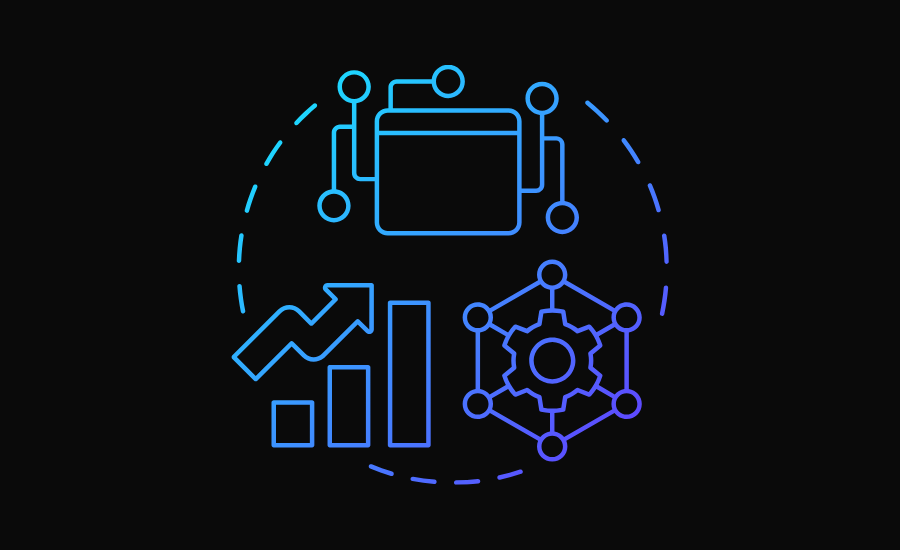
Modern businesses need connected, consistent systems that provide a centralized view of their operations.
At Talvio, we support you in integrating ERP and CRM solutions to unify your data, streamline your processes, and enhance team performance.
We analyze your structure, existing tools, and internal workflows to implement solutions that truly fit your organization.
We work with leading platforms — including Odoo, Dynamics, and others — to deliver reliable, flexible, and scalable integrations.
We examine your business processes, existing tools, and objectives to identify the ERP or CRM best suited to your organization. Whether it’s Odoo or another platform, our approach focuses on consistency, performance, and alignment across all your internal operations.
We design an architecture that seamlessly connects your ERP, CRM, and existing software. We ensure data synchronization, workflow automation across your applications, and overall system coherence — regardless of the platforms used (Odoo, Salesforce, HubSpot, etc.).
We configure your ERP/CRM solution to accurately reflect your business processes and support your daily operations. This includes setting up internal automations, creating dashboards and customized reports, and adapting or personalizing existing modules as needed.
A single platform for unified and consistent operations.
Improved alignment across teams, departments, and tools.
Workflows tailored to your business reality for measurable performance gains.
All your data — customers, sales, inventory, finances — centralized in a unified system to reduce errors and improve visibility.
Smart dashboards, custom KPIs, and automated key indicators to track your organization’s performance.
With a clear, complete view of your operations, you can act faster, anticipate needs, and optimize your processes based on real data.
In this section, we answer the most common questions about implementing, migrating, and integrating ERP and CRM solutions.
Our goal is to give you a clear and transparent understanding of our approach so you can make confident technology decisions.
We work with the main solutions on the market (proprietary, open-source, or cloud ERP and CRM systems), as well as internal or custom-built tools.
Our approach is fully focused on your needs — not on a specific platform.
It depends on your processes:
A CRM manages your customers, sales, and marketing.
An ERP manages your internal operations: finance, inventory, HR, production, etc.
After analyzing your business reality, we recommend the most suitable solution — or a combination of both.
Yes. We integrate via APIs, connectors, or data synchronizations to connect your existing tools: accounting, e-commerce, logistics, HR, marketing, and more.
Absolutely. We migrate your customer data, products, inventory, history, documents, transactions, and internal processes while preserving their integrity and consistency.
More structured and harmonized processes
Fewer manual tasks
Better visibility across your operations
Reduced human errors
Unified tools and a single source of truth
Faster decisions thanks to dashboards and KPIs
Greater agility and technological scalability